

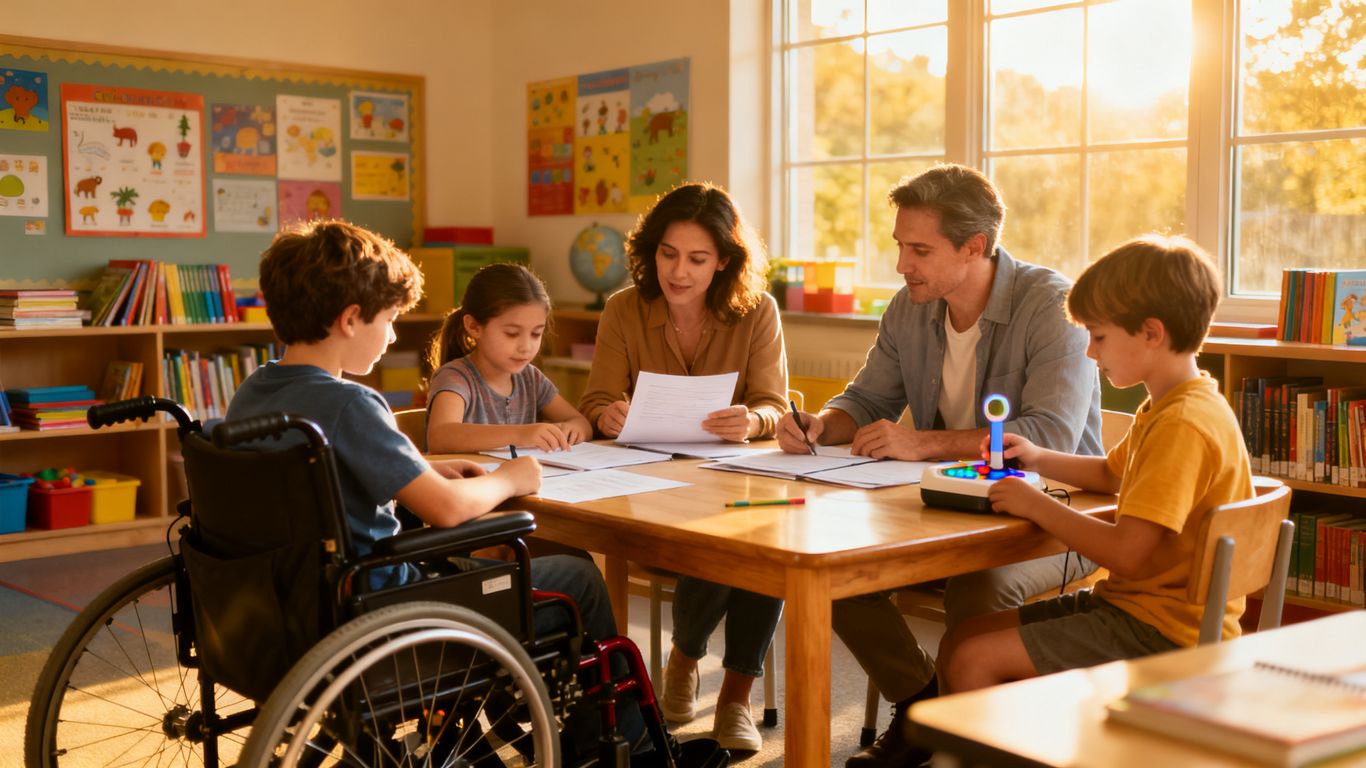
What Is an IEP?
An Individualized Education Program, or IEP, is a written plan developed for students who need extra support to succeed in school. It’s a legal document that outlines the specific educational goals, services, and accommodations a child will receive. For children with cerebral palsy (CP), an IEP is particularly important because it addresses their unique physical, cognitive, and communication needs. This plan is developed by a team, including parents, teachers, and specialists, to make sure the student gets the right kind of help. The law ensures a free and appropriate public education for all eligible children, and the IEP is the tool that makes this a reality for students with disabilities. It’s designed to help them learn and grow in the school environment.
Why Are IEPs Essential for Children With Cerebral Palsy?
IEPs are really important for kids with cerebral palsy. They help make sure these students can learn alongside their classmates and have the same chances to do well. Because CP can affect movement, communication, and other areas, a standard approach to teaching might not work. An IEP allows for changes in how lessons are taught, how the classroom is set up, and what tools are used. This tailored plan helps address the specific challenges a child with CP might face. Whether the student learns in a regular classroom or a separate setting, the IEP makes sure every effort is put into helping them grow academically and socially. It’s about giving them the support they need to reach their potential.
IEP Goals for Students With Cerebral Palsy
Setting clear, measurable goals is a big part of any IEP, and it’s especially true for students with cerebral palsy. These goals often go beyond just academics. They can include things like improving speech and language skills, getting better at using their hands for tasks, or participating more in class activities. For example, a goal might be for a student to use a communication device to ask questions during a lesson, or to improve their ability to hold a pencil for writing. These goals are broken down into smaller steps, and progress is checked regularly. This helps build confidence and independence for the student, both in and out of the classroom. The focus is on supporting the child’s overall development and helping them achieve what they can.
The IEP Development Process for Cerebral Palsy Education
Developing an Individualized Education Program (IEP) for a student with cerebral palsy (CP) is a structured process aimed at creating a personalized plan for their educational journey. This process begins with recognizing that students with CP might need specific educational support to thrive.
Identifying the Need for Special Education Services
The first step involves acknowledging that a student’s unique needs, stemming from cerebral palsy, may require specialized educational services. This isn’t about labeling a child, but rather about identifying areas where extra support can make a significant difference in their learning and development. Schools are trained to look for these indicators and initiate the process.
Evaluating Student Needs and Eligibility
Once the need is identified, a thorough evaluation takes place. Qualified professionals will assess the student’s specific abilities, challenges, and how cerebral palsy impacts their learning. This evaluation looks at various aspects, including:
- Academic performance
- Physical and motor skills
- Communication abilities
- Social and emotional development
Based on these findings, the team, including parents, determines if the student is eligible for special education services under the Individuals with Disabilities Education Act (IDEA). This eligibility is key to accessing the tailored support the IEP provides.
Collaborative Team Approach to IEP Creation
Creating the IEP is a team effort. Parents are considered vital members of this team, working alongside teachers, school administrators, therapists (like physical, occupational, and speech therapists), and other specialists. This collaboration ensures that the plan is well-rounded and addresses all facets of the student’s needs. The team discusses the evaluation results, sets appropriate goals, and decides on the specific services, accommodations, and modifications that will be included in the IEP. This shared approach helps build a consensus and a shared commitment to the student’s success.
Key Components of an Effective Cerebral Palsy IEP
An effective Individualized Education Program (IEP) for a student with cerebral palsy is built on several important parts. It’s not just a document; it’s a roadmap designed to help the student learn and grow in school. Think of it as a custom-made plan that looks at everything the student needs, from classroom learning to physical support.
Detailing Special Education and Related Services
This section is where the specific help your child will get is laid out. It’s important that this is clear and detailed. The IEP should list:
- Special education services: These are the direct teaching and learning supports tailored to your child’s needs. This could involve specialized instruction in certain subjects or strategies to help with learning challenges related to cerebral palsy.
- Related services: These are the supports that help your child benefit from their special education. For students with cerebral palsy, this often includes therapies like physical therapy (PT) to help with movement and balance, occupational therapy (OT) for fine motor skills and daily tasks, and speech-language therapy to assist with communication. The IEP must state how often these services will be provided, where, and for how long.
- Assistive technology: If your child needs special tools to communicate, learn, or move around, like a communication device or adapted keyboard, these should be specified here.
Ensuring Participation With Non-Disabled Peers
A big part of the IEP is making sure students with disabilities are included with their classmates as much as possible. This is often called the ‘least restrictive environment.’ The IEP should explain:
- How the student will participate in general education classes alongside students without disabilities.
- Any specific activities where the student will join their peers.
- If there are times when the student needs to be in a separate setting for certain instruction or support, the IEP must explain why this is necessary and how it still promotes inclusion.
Utilizing Adaptive Equipment and Support
This part focuses on the tools and adjustments that make learning accessible. For a student with cerebral palsy, this can make a huge difference in their ability to participate and succeed. The IEP should consider:
- Physical accommodations: This might include things like special seating, ramps, or modified desks to help with mobility and comfort.
- Learning aids: This could involve adapted learning materials, larger print, or specialized software.
- Personal assistance: If the student needs help with tasks like feeding, toileting, or moving between classes, the IEP should outline what support will be provided and by whom.
The goal is to provide all the necessary supports so the student can learn and engage effectively.
Parental Rights and Advocacy in the IEP Process
Your Role as a Parent Advocate
Parents are recognized as vital members of the Individualized Education Program (IEP) team. Their unique insights into their child’s strengths, challenges, and daily life are indispensable. Actively participating in IEP meetings is not just a right, but a responsibility for parents seeking the best educational outcomes for their child. This involvement goes beyond simply attending meetings; it means coming prepared with questions, observations, and a clear understanding of your child’s needs. Parents serve as the primary advocates, ensuring that the IEP accurately reflects the student’s requirements and that the school district is meeting its obligations under special education law.
Understanding Your Rights to Challenge Decisions
Federal law, specifically the Individuals with Disabilities Education Act (IDEA), grants parents significant rights within the special education process. If parents disagree with any part of the proposed IEP, they have the right to challenge those decisions. This can occur during scheduled IEP meetings, where concerns can be voiced and modifications suggested. If disagreements persist, parents can pursue formal dispute resolution options. These include:
- Requesting mediation with a neutral third party to help facilitate an agreement.
- Initiating a due process hearing, where an impartial specialist will make a binding decision after hearing from all parties.
- Filing a formal complaint with the state’s education agency.
Bringing External Expertise to the IEP Team
Parents are legally permitted to invite other individuals to IEP meetings who may possess specialized knowledge or expertise regarding their child. This could include private therapists, medical doctors, or other specialists who work with the child outside of school. Including these professionals can provide the IEP team with a more complete picture of the child’s needs and can contribute to developing a more effective and tailored educational plan. The goal is to assemble a team with all the necessary perspectives to best support the student.
Addressing Disagreements Within the IEP Process
It’s not uncommon for parents and school teams to have different ideas about what a student with cerebral palsy needs. When disagreements arise regarding an Individualized Education Program (IEP), it’s important to know there are steps to resolve these issues.
Communicating Concerns With School Officials
The first step when you have concerns about your child’s IEP is to talk directly with the school. This might involve speaking with the teacher, special education coordinator, or principal. Often, a calm conversation can clear up misunderstandings and lead to a resolution. Open communication is key to finding common ground. Sometimes, simply explaining your perspective or asking for clarification can make a big difference.
Requesting Mediation for Dispute Resolution
If talking directly with school officials doesn’t resolve the disagreement, the next step might be mediation. Mediation involves a neutral third party who helps facilitate a discussion between you and the school. This person doesn’t make decisions but guides the conversation to help both sides reach an agreement. It’s a less formal process than a hearing and can be a good way to find a compromise.
Seeking a Due Process Hearing
If mediation isn’t successful or isn’t an option, you have the right to request a due process hearing. This is a more formal legal proceeding where an impartial hearing officer reviews the facts and makes a decision about the IEP. Both you and the school will have the chance to present your case. This is a significant step and often involves gathering evidence and potentially legal representation.
Filing a Formal Complaint
As a final option, if other methods haven’t resolved the issue, you can file a formal complaint with your state’s Department of Education. This involves submitting a written document detailing your concerns, the steps you’ve already taken, and what resolution you are seeking. The state agency will then investigate the complaint.
Ongoing Assessment and IEP Adjustments
The Individualized Education Program (IEP) is not a static document; it’s a living plan that requires regular attention. Consistent monitoring of a student’s progress is key to making sure the IEP remains effective. This involves looking at how well the student is meeting their stated goals and whether the services provided are making a real difference. Without ongoing assessment, an IEP can quickly become outdated, failing to address the child’s current needs or support their continued development.
Several steps are involved in keeping an IEP current and responsive:
- Measuring and Reporting Student Progress: IEPs must include measurable goals. Progress toward these goals needs to be tracked systematically. Reports detailing this progress should be issued at least as often as regular report cards are sent home. These reports offer a clear picture of academic performance and functional abilities, highlighting what’s working and where adjustments might be needed. This information is vital for informed decision-making during review meetings.
- Regular IEP Reviews and Reevaluations: The IEP team typically meets annually to review the entire program. This meeting is an opportunity to discuss the student’s progress, the effectiveness of current services, and any changes in the student’s needs. If parents or teachers notice significant changes or concerns, they can request a review more frequently than once a year. Beyond annual reviews, students must be formally reevaluated every three years to confirm they still qualify for special education services under federal guidelines. This reevaluation process helps ensure that the student continues to receive appropriate support.
- Adapting the IEP to Evolving Needs: As a child grows and learns, their needs will change. The IEP must be flexible enough to adapt to these evolving requirements. This might mean adjusting goals, changing the frequency or type of related services, or modifying accommodations. For instance, if a student masters a particular skill, the IEP goals should be updated to reflect new learning objectives. Similarly, if a student begins using a new piece of adaptive equipment, the IEP should detail how it will be integrated into their educational day. Effective teaching strategies for students with disabilities often rely on this adaptive approach [3d18]. The goal is to ensure the IEP continues to provide the most appropriate and beneficial educational experience for the child throughout their school years.
Exploring Additional Support Services for Cerebral Palsy
Understanding Related Special Education Services
Beyond the core academic instruction, children with cerebral palsy often benefit from a range of specialized services designed to address their unique needs. These services are typically integrated into the IEP to provide a holistic approach to education. They aim to support the student’s physical, cognitive, and communication development, thereby improving their overall access to the curriculum and participation in school activities. These related services are not optional extras but are mandated components of a Free Appropriate Public Education (FAPE) when deemed necessary by the IEP team.
The Role of Physical and Occupational Therapy
Physical therapy (PT) and occupational therapy (OT) are frequently integral parts of an IEP for students with cerebral palsy. Physical therapy focuses on improving gross motor skills, such as walking, balance, and coordination. Therapists work with students on exercises and strategies to enhance mobility and physical independence within the school environment. Occupational therapy, on the other hand, concentrates on fine motor skills and activities of daily living. This can include assistance with tasks like writing, using utensils, dressing, and managing personal care, which are vital for a student’s autonomy and participation in classroom tasks. Both therapies work collaboratively to help students achieve their maximum potential.
Speech-Language Therapy and Communication Support
Speech-language therapy plays a significant role for many students with cerebral palsy, addressing a variety of communication challenges. This can range from difficulties with articulation and voice production to more complex issues with language comprehension and expression. Speech-language pathologists (SLPs) work with students to develop effective communication strategies, which may include augmentative and alternative communication (AAC) devices. These devices can be life-changing, providing a means for students to express their thoughts, needs, and ideas. The goal is to ensure that every student has a voice and can engage meaningfully with their peers and educators. Early intervention and school-aged services for cerebral palsy are available through the Individuals with Disabilities Education Act (IDEA).