

The moment Rachel brought her three-month-old daughter into a clinic seeking pediatric chiropractic services, she was desperate, exhausted, and willing to try anything to help her constantly crying infant find relief. Her story represents a fundamental question facing parents across Singapore and beyond: when conventional medicine offers limited solutions for childhood discomfort, where do we turn, and how do we ensure we are making choices that truly serve our children’s wellbeing?
Understanding the Landscape
Let us start with what matters most: the safety and dignity of our children. Chiropractic care for children remains one of the most debated topics in complementary medicine, and parents deserve honest, evidence-based information to make informed decisions. The practice involves gentle adjustments to address musculoskeletal issues in infants, children, and adolescents, using techniques vastly different from those applied to adults.
The pressure used on an infant is roughly equivalent to the pressure you would use to test the ripeness of a tomato. For older children, techniques remain gentle and adapted to their developing bodies. This is not about dramatic manipulations but rather subtle interventions designed to support proper growth and development.
Conditions That Bring Families to Treatment
Parents seek paediatric chiropractic treatment for a range of concerns, some more controversial than others. Common reasons include:
- Colic and excessive crying in infants
- Breastfeeding difficulties related to neck tension
- Torticollis (twisted neck)
- Growing pains in school-aged children
- Posture issues related to heavy school bags
- Sports injuries in active youngsters
- Headaches and neck pain in adolescents
Dr Jennifer Lim, a chiropractor in Singapore specialising in paediatric care, explains: “Many parents come to us when they have exhausted other options. A mother whose baby cries for hours despite being fed, changed, and comforted is not being frivolous. She is advocating for her child’s comfort and seeking answers.”
The Evidence We Have and the Questions That Remain
Here is where we must be unflinchingly honest. The scientific evidence supporting chiropractic services for young patients varies considerably depending on the condition. For musculoskeletal issues like torticollis or certain types of pain, research shows promising results. A 2016 systematic review found that manual therapy, including chiropractic care, showed positive outcomes for children with musculoskeletal conditions.
However, claims that chiropractic care can treat conditions like ear infections, asthma, or ADHD lack robust scientific support. As Dr Michael Chen, a paediatrician who occasionally refers patients for chiropractic evaluation, notes: “We must distinguish between what is proven, what is plausible, and what is wishful thinking. The bar for evidence must be high when we are talking about children.”
This matters because vulnerable families, already stressed and seeking help, deserve practitioners who are honest about what treatment can and cannot achieve.
Safety Considerations Parents Must Know
The safety record for children’s chiropractic care is generally good when performed by properly trained practitioners, but “generally good” is not good enough when discussing our children. Serious adverse events are rare but have been documented. This means parents must:
- Verify the practitioner has specific training in paediatric care
- Ensure thorough health screening occurs before treatment
- Maintain open communication with their child’s paediatrician
- Watch for any concerning symptoms following treatment
- Trust their instincts if something feels wrong
Absolute contraindications exist. Children with certain bone disorders, acute infections, or spinal instability should not receive chiropractic treatment. A responsible practitioner will conduct proper screening and refer back to medical doctors when necessary.
What Treatment Actually Looks Like
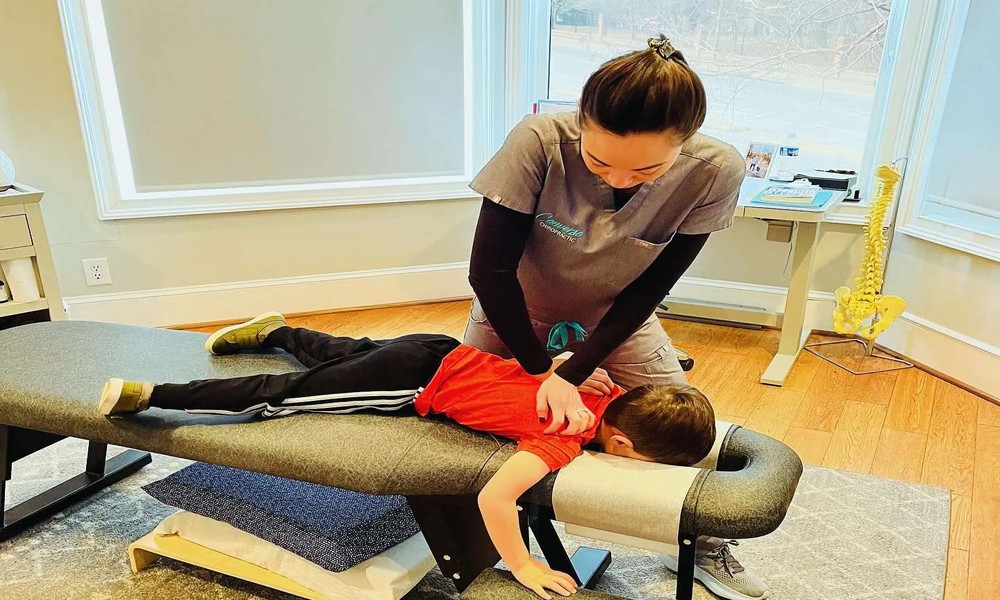
I observed several paediatric sessions to understand what families experience. For infants, treatment might involve gentle fingertip pressure to release tension in the neck or spine. Older children might receive light adjustments whilst lying on specially adapted tables or even whilst sitting and playing.
The best practitioners create a comfortable environment. They explain everything to both parents and children in age-appropriate language. They move slowly, allowing the child to feel safe. As one mother told me: “My son was nervous at first, but the chiropractor let him explore the room, showed him the table, and made it feel like an adventure rather than a medical procedure.”
The Broader Context of Children’s Health
Paediatric spinal care services exist within a larger ecosystem of children’s health. Singapore’s competitive academic environment means many children carry heavy bags, sit for long hours, and experience postural stress from early ages. The rise in childhood obesity adds additional strain on developing spines. Increased screen time creates new patterns of neck and shoulder tension even in young children.
These environmental factors create genuine musculoskeletal issues that require attention. The question is not whether children experience these problems but rather how we address them most effectively.
Making the Right Choice for Your Child
If you are considering chiropractic treatment for your child, approach the decision with both openness and appropriate caution. Interview potential practitioners thoroughly. Ask about their paediatric training, how many children they treat, and their philosophy on evidence-based care. A good practitioner welcomes questions and expresses appropriate humility about the limits of their intervention.
Request that they communicate with your paediatrician. Healthcare should be collaborative, with all providers working toward the single goal of your child’s wellbeing. Beware of practitioners who make sweeping claims, discourage medical care, or promise results that sound too good to be true.
A Path Forward
Every parent wants to believe they are doing right by their child. When our children hurt, when they struggle, when they cry inconsolably, we feel compelled to act. That impulse comes from love, and it deserves respect. What it also deserves is honesty, rigour, and a commitment to evidence-based care. The landscape of pediatric chiropractic services can offer genuine support for specific conditions when approached thoughtfully, with qualified practitioners, realistic expectations, and ongoing medical oversight that keeps our children’s safety and dignity at the absolute centre of every decision we make.