

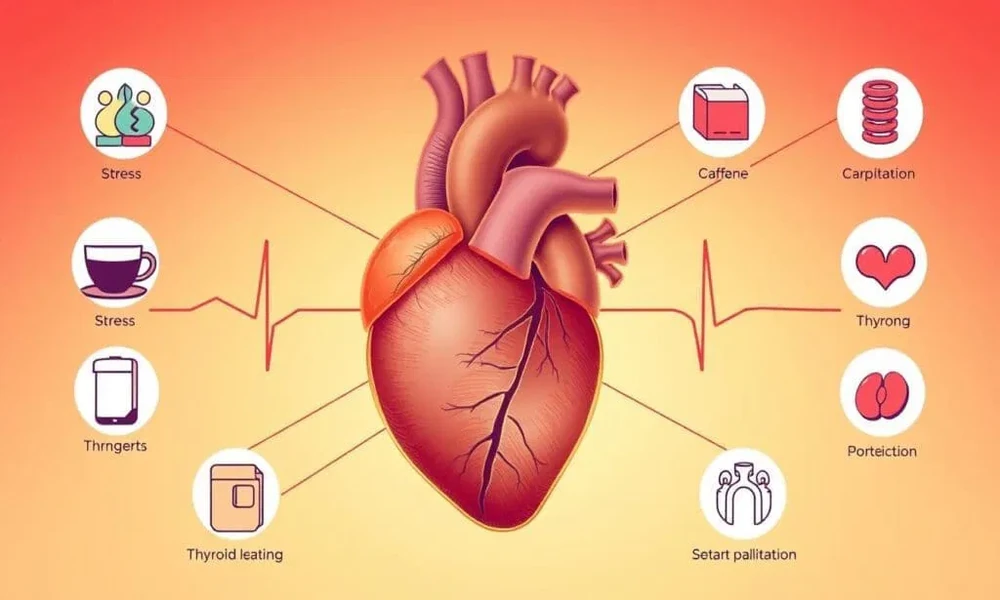
Heart palpitations may feel like racing, fluttering, pounding, thumping or skipped beats. They are common and are not always caused by a dangerous heart problem. However, they should not be ignored when they are frequent, prolonged or associated with other symptoms. A recent clinical review of palpitations explains that assessment normally begins with the person’s history, physical examination and an electrocardiogram, followed by longer rhythm monitoring when needed.
Common triggers include caffeine, nicotine, alcohol, lack of sleep, emotional stress, fever and dehydration. Some cold medicines, inhalers, thyroid medicines and weight-loss products may also increase the heart rate.
Palpitations may occur because of an abnormal heart rhythm. Examples include extra beats, supraventricular tachycardia or atrial fibrillation. The feeling alone cannot identify the rhythm.
Keep a simple symptom record. Write down when the episode began, how long it lasted, what you were doing, what you had eaten or drunk, and whether you experienced dizziness, chest discomfort or breathlessness.
A smartwatch or phone recording may provide useful information, but it is not a complete diagnosis. Device readings can be affected by movement and may not detect every rhythm problem.
A clinician may arrange an ECG when symptoms are present. If episodes come and go, a Holter monitor or event recorder may be more useful. Blood tests may be used to check anaemia, thyroid function, electrolytes or other possible causes.
Treatment depends on the cause. Reducing caffeine may help one person, while another may need medicine, treatment for thyroid disease, management of anxiety or a heart procedure.
Do not use an unlabelled herbal mixture for palpitations. Some natural products contain stimulants or ingredients that interact with heart, thyroid or blood-pressure medicines.
People with known heart disease, previous fainting, a family history of sudden cardiac death or symptoms during exercise need careful evaluation. Pregnant people should also discuss persistent palpitations with their clinician.
Emergency help is needed when palpitations occur with chest pressure, fainting, severe breathlessness, weakness on one side, confusion or a very fast heart rate that does not settle.
Madhavbaug provides information about its integrative heart-care programme. Readers can find broader organisational and clinic information on the Madhavbaug homepage.
Avoid making a diagnosis from the pulse sensation alone. A qualified clinician should investigate recurrent or worrying symptoms.